Core Insights at a Glance
- Child-led exploration serves as the fundamental engine for cognitive and social development in early years.
- A balanced approach integrates play with structured learning to ensure academic readiness without sacrificing childhood joy.
- The environment plays a critical role, acting as a “third teacher” that encourages curiosity and independence.
- Selecting the right educational setting requires observing how a centre fosters both intellectual growth and emotional well-being.
The Spark of Discovery
Have you ever watched a toddler try to figure out how a toy works? They pull, they push, they shake it, and eventually, they look at you with triumph in their eyes. That brief moment is not just play; it is scientific inquiry in its purest form. In the early years, children are hardwired to investigate the world around them. When we design an environment that respects this instinct, we create the perfect launchpad for lifelong learning. A high-quality nursery curriculum in Singapore acknowledges that curiosity is the most powerful tool a child possesses. By nurturing this drive rather than suppressing it with rote memorisation, educators can transform daily lessons into genuine discoveries. This article explores why the most effective approach to early education starts with the child’s innate desire to touch, see, and understand everything in their orbit.
Why Is Play The Serious Business Of Childhood?
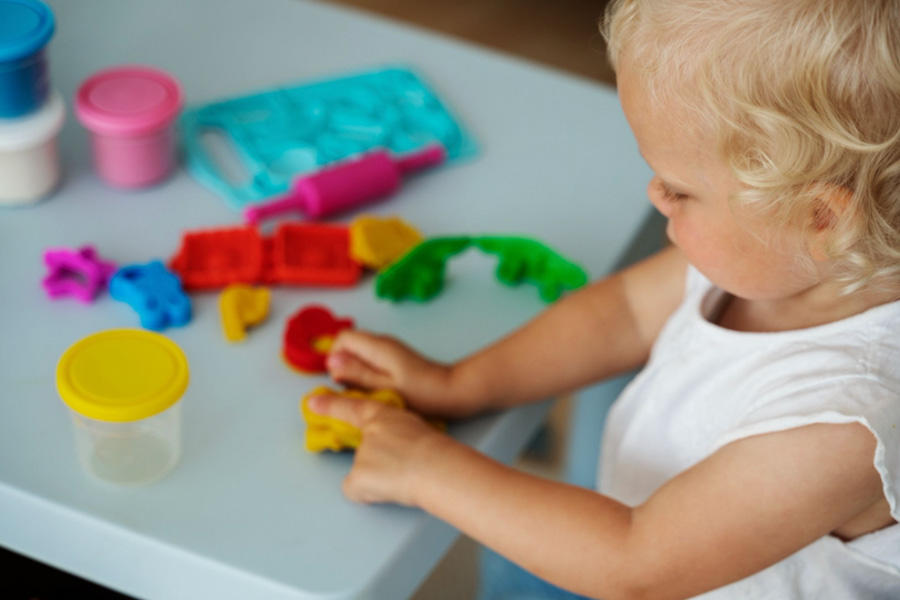
People often mistake play for a lack of structure, but for a developing brain, play is the most rigorous work there is. When a child engages in building a block tower or mixing paints, they are navigating complex problems of physics, spatial reasoning, and social negotiation. They are asking questions like, “What happens if I put this here?” or “Can we share these crayons?”
This is how children build neural connections. They are not merely having fun; they are testing hypotheses and learning to manage frustration when a tower topples. If we treat play as a distraction from ‘real’ learning, we miss the point entirely. Authentic learning occurs when children feel safe enough to experiment. A classroom that prioritises play-based activities allows children to practise collaboration and empathy in a low-pressure setting. It turns the classroom into a laboratory where the stakes are low, but the rewards for cognitive development are massive. Honestly, you can tell a lot about a curriculum by how much laughter and focused silence you hear during the day. It is about balancing the joy of discovery with the guidance of skilled educators.
What Are The Essential Pillars Of A Quality Nursery Curriculum In Singapore?
A strong nursery curriculum in Singapore must do more than keep children occupied; it needs to bridge the gap between curiosity and academic readiness. You might wonder what that bridge looks like. It isn’t found in heavy textbooks or endless worksheets. Instead, it involves a thoughtful sequence of experiences that introduce literacy, numeracy, and social skills in ways that feel meaningful to a three-year-old.
| Approach | Key Focus | Developmental Outcome |
|---|---|---|
| Child-Led Exploration | Curiosity, Creativity | Critical Thinking, Independence |
| Structured Learning | Literacy, Numeracy | Academic Readiness, Foundational Knowledge |
The curriculum should be dynamic. It should adjust to the children’s interests while keeping clear developmental milestones in sight. For instance, a unit on nature might spontaneously evolve into a counting exercise as children collect leaves of different sizes. This flexibility is vital. It shows that the educators are listening to the children rather than just following a rigid script. A well-rounded programme recognises that early literacy starts with storytelling and oral language, not just letter recognition. By weaving academic goals into daily routines, we ensure that children acquire the foundational knowledge they need for primary school without the stress that often accompanies formal schooling. It is about creating a roadmap that guides them gently toward their potential.
How Does A Leading Private Preschool In Singapore Foster Natural Curiosity?
When you step into a high-quality private preschool in Singapore, you should immediately feel a sense of intentionality. The space is not just a room; it is an environment designed to provoke questions. Are the materials accessible? Can a child reach the books without asking for help? Is there enough space to move and create? These are questions that matter because the physical layout dictates how a child interacts with their surroundings.
A great centre acts as a third teacher. By intentionally curating the environment, educators invite children to explore specific concepts. If the goal is to develop fine motor skills, you might find puzzles and beads placed in a way that catches the light. If it is social skills, there will be communal areas for role-play. It is a subtle art. You aren’t forcing the child to learn; you are setting the table and letting them discover the feast. This level of care in the environment signals to the child that their interests are valued, which is the most effective way to build their self-confidence and desire to learn.
Can Learning Be Both Structured And Child-Led?
This is perhaps the most debated topic in early childhood education. How do you maintain academic rigour while keeping the spark of independence alive? The secret lies in scaffolding. Educators provide the structure, including the boundaries, the routine, and the resources, but the children choose the direction of their exploration.
Think of it as a guided tour through a forest. The path is marked to ensure everyone stays safe and moves forward, but the children are free to stop and examine a beetle or a particularly interesting rock along the way. A robust nursery curriculum in Singapore excels at this delicate balance. It provides enough framework so that children know what to expect, which reduces anxiety and builds security. Simultaneously, it leaves ample room for the children to direct their own investigations. When a child leads the inquiry, their engagement deepens. They are invested in the outcome because they chose the goal. By honouring this balance, we teach them how to learn, how to focus, and how to take ownership of their own education. This, ultimately, is the greatest gift we can offer.
Building Their Future
Understanding how children explore is the cornerstone of effective teaching. It shifts our perspective from seeing them as empty vessels waiting to be filled, to seeing them as active participants in their own intellectual journey. By creating environments that respect their innate curiosity, we set them up for a lifetime of confidence and intellectual agility. If you are ready to give your child a head start in a nurturing, play-focused environment, Wharton Preschool provides the ideal setting to help your little one grow. Please visit our website today to get to know more about us and see how our unique curriculum can support your child’s early development.